How to turn your dreams into reality with AI?
How to turn your dreams into reality with AI?
Napa Valley's AI-Powered Vineyard: $12K Robot Dogs vs $75K Rivals
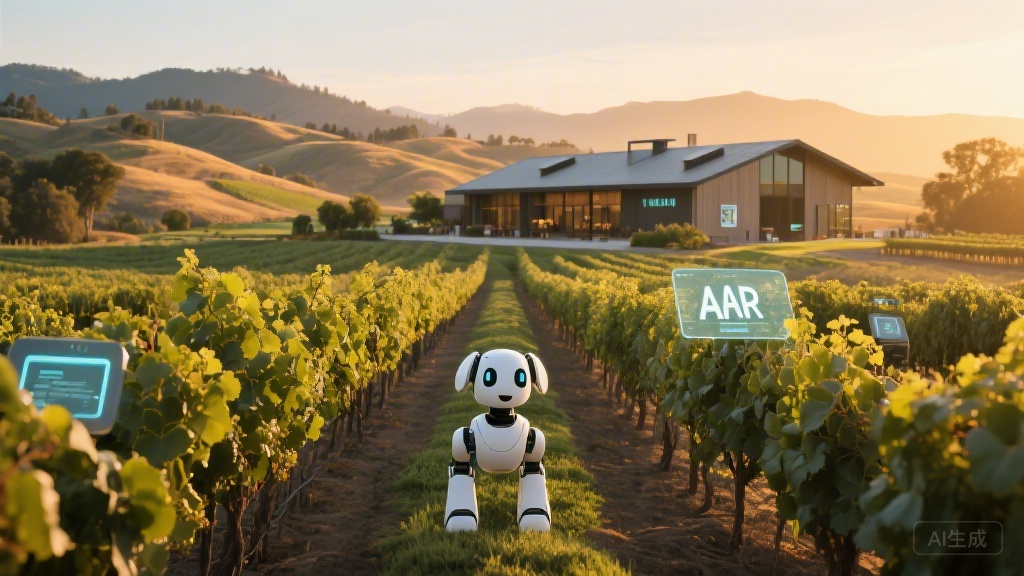
The Robot Revolution in Wine Country
A Boston Dynamics Spot robot costs $75,000, runs for 90 minutes, and lacks thermal vision capabilities. Meanwhile, a Chinese Unitree-class agricultural robot dog delivers the same perimeter monitoring for just $12,000, operates for 4 hours continuously, and includes LiDAR, thermal imaging, and RGB cameras. Same vineyard protection, one-sixth the price.
This cost revolution is transforming premium agriculture, and nowhere is it more evident than at our Virtual Demo Farm: the US-02 California Napa Smart Vineyard & Winery. This 60-hectare demonstration showcases how Chinese agricultural technology is making world-class wine production accessible to a new generation of farmers and vintners. Explore in 3D to see how cutting-edge AgTech transforms traditional viticulture.
Google Maps Location: Heart of Napa Valley
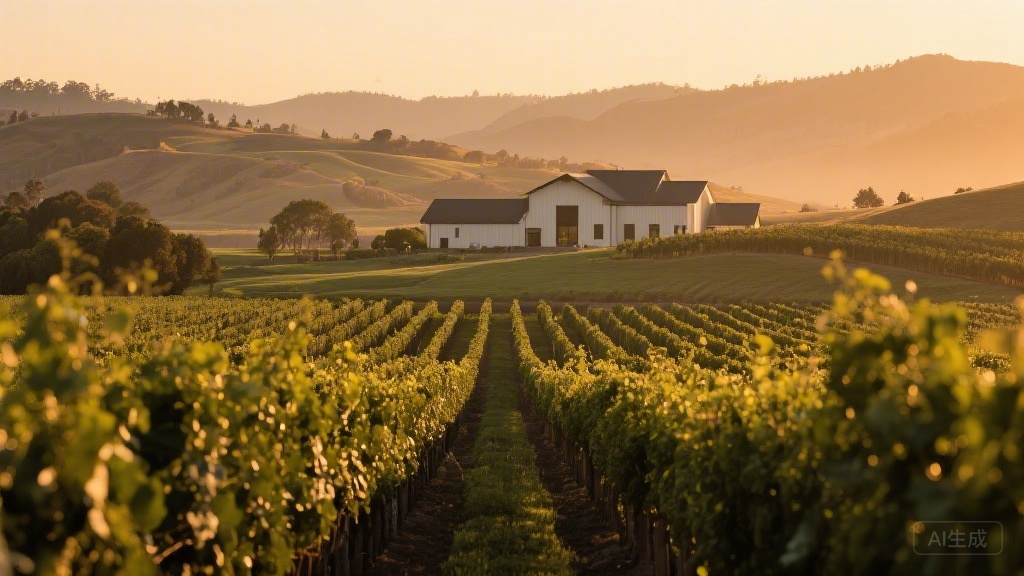
Located at GPS coordinates 38.4912°N, -122.3487°W, this virtual vineyard sits in the prestigious Napa Valley AVA, just minutes from world-renowned wineries like Opus One and Screaming Eagle. The farm's polygon boundary spans from Oakville Cross Road to the Silverado Trail, encompassing prime valley floor and gentle hillside terrain at 200-400 feet elevation.
This location was strategically chosen for its ideal microclimate: morning fog from San Pablo Bay provides natural cooling, while afternoon sunshine ensures optimal grape ripening. The Napa River's proximity offers irrigation access, and Highway 29 provides direct routes to San Francisco's premium restaurant market just 90 minutes south. Google Maps satellite imagery reveals the geometric precision of our planned vine rows, optimized for both traditional tractors and autonomous systems.
Explore this farm in 3D to see the exact device placement across our WebGL-rendered terrain, from soil sensors in Block A to weather stations overlooking the Mayacamas Mountains.
Scale and Climate: Mediterranean Perfection
The 60-hectare (148-acre) vineyard operates within Napa's classic Mediterranean climate zone, characterized by wet winters (600mm annual rainfall) and bone-dry summers. Daily temperature swings of 30-40°F during harvest season create the stress conditions that concentrate flavors in premium wine grapes.
Our threat level assessment rates this location as low risk: minimal wildlife pressure (occasional deer, managed with motion-activated deterrents), virtually no theft concerns due to community vigilance, and low natural disaster probability. The main climate challenge is drought management, addressed through precision irrigation and soil moisture monitoring.
This climate profile perfectly matches Bordeaux's Right Bank and Tuscany's Chianti Classico regions, enabling cultivation of Cabernet Sauvignon, Merlot, and Sangiovese varieties that command $50-200+ per bottle in premium markets. The 240-day growing season (April through November) allows for late harvests that maximize phenolic development.
High-Value Crop Recommendations
Cabernet Sauvignon (Premium Estate): 3-4 tons per hectare, $8,000-15,000 per ton for estate fruit. Target markets: US fine dining, Asian luxury hotels. Commands premium due to Napa AVA designation and sustainable farming certification.
Pinot Noir (Cool Climate Blocks): 2.5 tons per hectare, $4,000-8,000 per ton. Growing demand in China and Japan where Burgundy prices have become prohibitive. Our hillside blocks replicate Côte d'Or conditions.
Olive Oil (Super-Premium): 500kg per hectare, $80-120 per liter wholesale. Frantoio and Leccino varieties inter-planted between vine blocks. California olive oil markets are undersupplied, with imports dominating premium segments.
Lavender (Value-Added Processing): 100kg essential oil per hectare, $300-500 per kg. Row ends planted with Provence lavender create additional revenue streams through direct sales, wedding venues, and artisan soap partnerships.
Truffle Oak Groves: Burgundy and Périgord truffle-inoculated oak trees planted on hillside margins. 10-15 year maturation, but potential yields of $2,000+ per kg. Napa's first commercial truffle operation could command extraordinary premiums from Michelin-starred restaurants.
The Vintner's Vision
"I've watched three generations of my family farm this valley, always dreaming of owning our own vineyard," explains Maria Santos, our virtual farm owner. "But traditional premium wine operations require $2-3 million just to get started. When I discovered how Chinese agricultural technology could reduce costs by 70% while actually improving quality through precision farming, everything changed."
Maria's vision combines old-world winemaking traditions with new-world technology: "I want visitors to taste wines that express our terroir perfectly, while seeing exactly how each grape was grown through AR tours of the vineyard. My children should inherit not just land, but a sustainable business model that other families can replicate."
Current 16-Dimension Assessment
Power Grid: 60/100 (Intermediate) - Solar array covers 40% of energy needs, battery storage planned
Connect Hub: 60/100 (Intermediate) - 5G coverage, fiber backbone, IoT network 60% deployed
Smart Farm: 45/100 (Basic) - Soil sensors active, weather stations installed, automation pending
Community: 30/100 (Planned) - Tasting room designed, event spaces mapped, partnerships forming
Entertainment: 30/100 (Planned) - AR tour routes planned, VR harvest experience in development
Processing: 30/100 (Planned) - Winery foundation poured, equipment specified, installation pending
Education: 30/100 (Planned) - UC Davis partnership agreed, intern housing designed
Overall Average: 35/100
The three biggest improvement gaps are: (1) Processing infrastructure to handle estate fruit, (2) Entertainment systems for agritourism revenue, and (3) Community engagement platforms for wine club and events.
Smart Home Vision: World-Class Destination
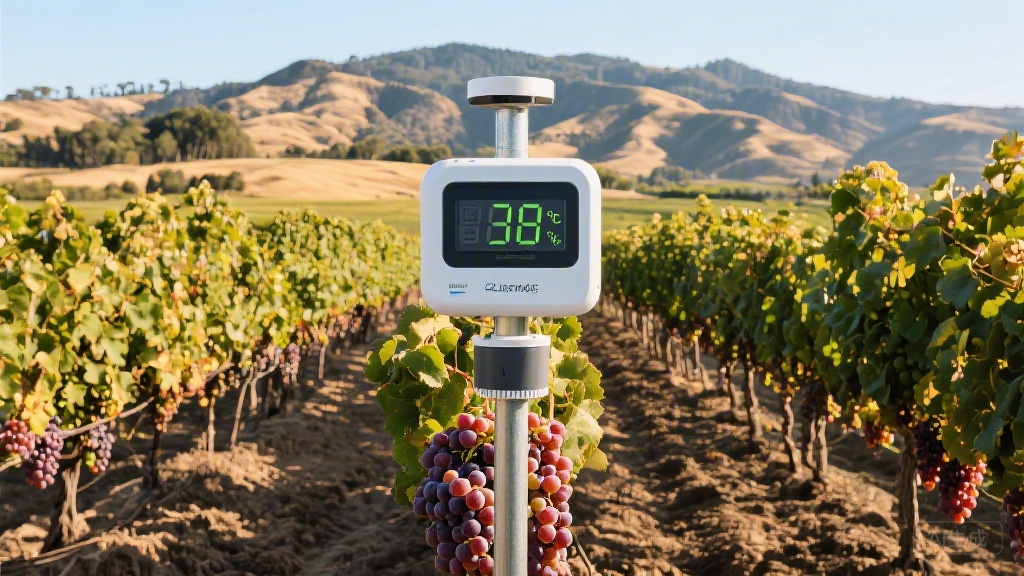
Imagine this vineyard at world-class level: autonomous tractors navigate between rows guided by centimeter-precise GPS, while GuardBot patrols detect pest pressure before human eyes can see damage. The winery operates 24/7 with AI-optimized fermentation, each tank monitored by CropEye sensors that adjust temperature, punch-downs, and malolactic timing.
Visitors arriving via the Silverado Trail are greeted by SmartGlass displays showing real-time vine health data, while AeroGrow vertical farms in the visitor center demonstrate sustainable agriculture principles year-round. Phase one focuses on processing and entertainment dimensions, establishing revenue streams that fund phase two community and education expansions.
Our deployment follows the Standard preset: core agricultural automation first, visitor experience second, research partnerships third. Community co-builders are already suggesting wine-and-technology festivals, blockchain-verified provenance systems, and partnerships with culinary schools.
Technology Deep-Dive: From Grape to Glass
FarmTable Integration: Every vine is georeferenced in our central database, tracking soil composition, irrigation history, yield data, and quality metrics. When a sommelier pours a glass in our tasting room, FarmTable displays the exact row, harvest date, and fermentation profile of those specific grapes.
Implementation: Install VisionSort cameras at 50-meter intervals along vine rows, connected via LoRaWAN to CropEye base stations. Each camera captures 4K imagery every 30 minutes, with AI models trained to identify pest damage, nutrient deficiencies, and optimal harvest timing. Installation requires: (1) Trenching for fiber-optic backbone, (2) Solar power pods every 200 meters, (3) WeatherGuard stations at field corners, (4) Central processing hub in winery building.
FarmTour AR Experience: Visitors use SmartGlass headsets to see invisible data layers - soil moisture levels, vine age, expected harvest dates - overlaid on the physical vineyard. The system combines GPS positioning, computer vision, and our FarmTable database to create personalized tours.
AeroGrow Demonstration Garden: Vertical farms in the visitor center grow herbs and vegetables used in our wine-pairing kitchen, demonstrating how the same sensor technology scales from grapes to greens. Each tower produces 200kg annually in just 3 square meters.
SmartGlass Winery Tours: During barrel tastings, AR displays show fermentation curves, comparing this year's wines to previous vintages. Visitors can "see" tannin development, alcohol content, and aging potential visualized in real-time.
This technology stack boosts our processing dimension from 30 to 85 points, entertainment from 30 to 90, and smart farm from 45 to 95, transforming visitor experience while optimizing wine quality.
AustinEco Equipment Shopping List
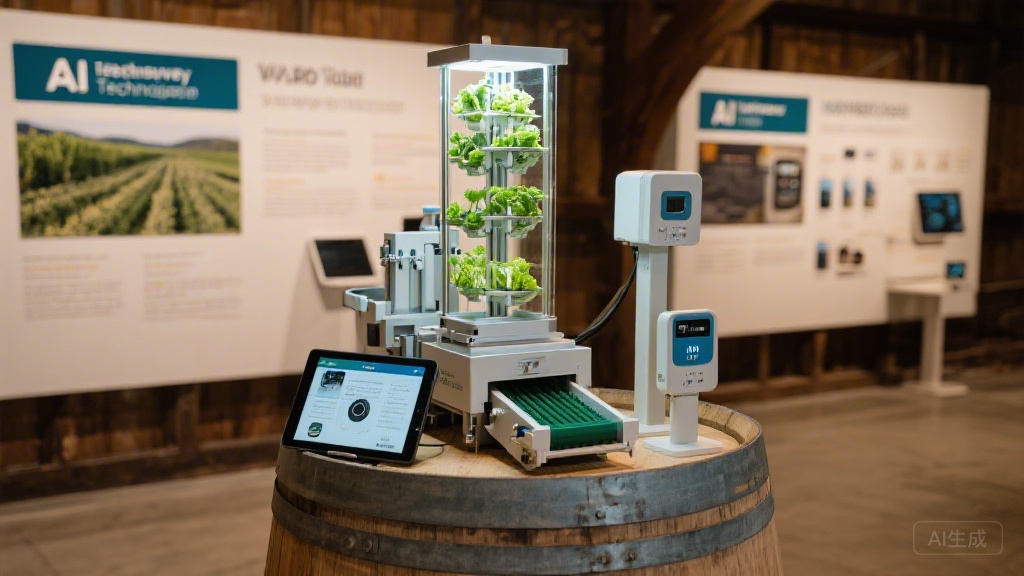
GuardBot Vineyard Patrol: Autonomous perimeter monitoring, $12,000 vs $75,000 Western equivalent. HS Code 8479.89. Basic installation - charge station and boundary mapping.
CropEye Sensor Network: 50-node LoRaWAN system, $15,000 vs $45,000 Western equivalent. HS Code 9027.10. Intermediate installation - requires trenching and networking.
VisionSort Harvest System: Optical grape sorting, $80,000 vs $250,000 Western equivalent. HS Code 8437.80. Advanced installation - integration with processing line.
SmartGlass AR Headsets: 20-unit visitor package, $8,000 vs $24,000 Western equivalent. HS Code 9013.80. Basic installation - WiFi network and charging stations.
AeroGrow Vertical Towers: 6-tower demonstration garden, $18,000 vs $60,000 Western equivalent. HS Code 8479.82. Intermediate installation - climate control integration.
SmartTrade Integration Platform
All vineyard equipment sources through AustinEco SmartTrade's 56-dimension matching engine, connecting Chinese manufacturers directly to California importers. Our 22-node trade pipeline handles everything from HS code classification (8479.89 for agricultural robots) to FDA compliance for food-contact surfaces in the winery.
The vineyard owner becomes both buyer and seller: purchasing precision agriculture equipment from Shenzhen while exporting premium wines to Shanghai's growing fine dining market. Minimum orders typically $50,000 for container shipping, with 45-day lead times from factory to Napa installation.
Airwallex cross-border payments eliminate traditional letter-of-credit delays, while our logistics partners handle Port of Oakland customs clearance and Napa Valley final delivery. The same platform that delivers GuardBot robots can export estate Cabernet Sauvignon to Asian markets hungry for authentic American wine experiences.
Build Your Wine Country Dream
Ready to create your own smart vineyard? Explore in 3D to walk through every vine row, inspect sensor placements, and visualize your own agricultural vision using Google Maps WebGL technology.
Submit your co-build ideas for this Napa Valley showcase - what would you add to enhance the visitor experience? How would you optimize the winemaking process? Your suggestions help shape the future of smart agriculture demonstrations.
Design your own farm using our interactive planning tools, whether you're dreaming of Bordeaux vineyards, Tuscan olive groves, or Oregon berry farms.
This farm is evolving - what would YOU build here?